
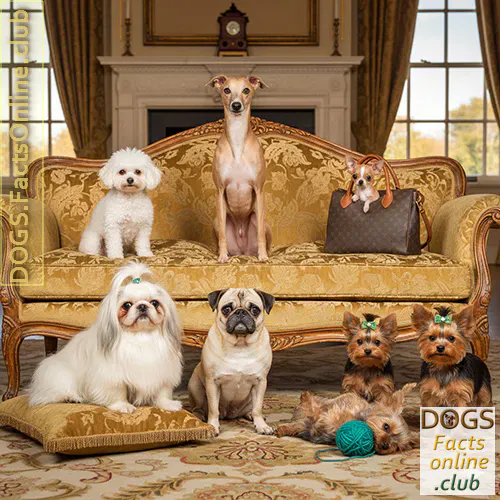






What exactly is a toy dog?
The term 'toy dog' conjures an image of a pampered lapdog, perhaps in the arms of royalty or nestled in a handbag.
While this picture is certainly part of the story, the reality of the Toy breed group or breed standard is far more complex and historically rich. This collection of small to tiny dogs, recognised in the UK by The Kennel Club and in the US by the American Kennel Club among others, represents an entire category of canine life dedicated almost exclusively to human companionship. Unlike the gundogs, terriers or pastoral breeds that were selected for functional work, the Toy group’s primary, defining purpose is sociability, a deep and ancient bond with mankind.
Jump to List of Toy breeds | FAQs
A history of companionship and status
The history of the Toy dog is intertwined with the rise of human civilisation. Evidence suggests that small companion dogs existed as far back as 2,000 BCE in ancient Egypt and their presence is documented throughout history in places like the Roman Empire, ancient China and South America. These dogs were intentionally bred to be small, portable and manageable, often serving as symbols of affluence and luxury.
In dynastic China, breeds such as the Pekingese and the Pug were highly revered, confined to the imperial courts and considered sacred. The Pekingese was valued for its lion-like appearance, while the Pug, with its facial wrinkles, was seen as a lucky charm. This tradition of royal patronage crossed to Europe, particularly in the 16th century, where European nobility became equally fond of these diminutive canines.
The Cavalier King Charles Spaniel, for instance, is inextricably linked to British history, especially King Charles II, who was allegedly more concerned with breeding his spaniels than with ruling. They were treasured as ‘comforter dogs’ and even served a surprising, practical purpose for aristocrats in cold castles and carriages, acting as foot warmers or supposedly attracting fleas away from their owners. The Italian Greyhound was favoured by nobility during the Renaissance for its grace and elegance, a smaller version of the sighthound bred specifically for companionship.
From workers to companions
While the main purpose of the Toy group is companionship, not all its members started life as lapdogs. Many breeds within the group are small versions of older working types, bred down in size to create a more convenient pet. This is where some of the more surprising members of the Toy group appear, revealing their unexpectedly functional origins.
Take the Affenpinscher, for example. This spirited little dog, whose name translates from German as 'monkey-like terrier', was originally bred in 17th-century German stables to exterminate rats and pests, demonstrating a working heritage quite similar to that of the Terriers. Similarly, the Brussels Griffon originated in the Belgian capital as a rough-and-tumble rat dog in coaching stables, before evolving into a sophisticated city companion.
The Yorkshire Terrier, or Yorkie, is another example of a former worker. In the mid-1800s, Scottish weavers in Yorkshire bred several types of Scottish terriers to create a small dog that could chase rodents in the textile mills. The feistiness, tenacity and bravery of a true terrier still live within the Yorkie, despite its now delicate, floor-length coat and role as a popular lapdog. This pattern of selecting smaller versions of working dogs, whether terriers, spaniels or pinschers, and re-purposing them for companionship, helped populate the Toy group with dogs that possess a 'big dog' personality in a small package.
Full List of Toy breeds
| Toy Breeds (A–J) | Toy Breeds (K–Z) |
|---|---|
|
Affenpinscher Australian Silky Terrier (UK) Bichon Frise Bolognese (UK) Cavalier King Charles Spaniel Chihuahua (Long Coat) Chihuahua (Smooth Coat) Chinese Crested Coton de Tulear English Toy Terrier (UK) Griffon Bruxellois Havanese Italian Greyhound Japanese Chin |
King Charles Spaniel (UK)
Löwchen (UK) Maltese Manchester Terrier (Toy) (US) Miniature Pinscher Papillon Pekingese Pomeranian Pug Russian Toy (US) Shih Tzu Toy Fox Terrier (US) Toy Poodle (US) Yorkshire Terrier |
Traits, temperament and the ‘grey areas’ of the group
The typical Toy dog is characterised by a strong desire for close human contact, enjoying being on their owner’s lap almost constantly. Their low physical exercise requirements, often satisfied with a brisk 30-minute walk, make them highly adaptable to urban living or smaller homes. However, their defining trait – the intense bond with their human family – is also the source of one of the group’s key challenges: separation anxiety. Because they were bred solely for company, many struggle to cope when left alone, leading to potential destructive behaviours or excessive barking.
The ‘grey area’ in understanding the Toy group lies in navigating their complex social dynamics. While affectionate and deeply loyal to their owners, they can be aloof or indifferent to strangers and may not be inherently 'dog social', particularly with larger, more boisterous breeds. Furthermore, despite their small size, many possess a watchdog instinct inherited from ancestors who were used as early warning systems in palaces or homes. This means some Toy breeds can be overly vocal, alerting their owners to every passing sound; this is a trait that requires careful training and socialisation.
Another important consideration is the fragility of some Toy dogs. Breeds with fine-boned structures, like the Italian Greyhound or the Chihuahua, are not as resilient as their larger counterparts and can be accidentally injured by rough play from young children or larger pets. Prospective owners must be aware of this delicate nature and be prepared to provide a safe and structured environment.
Controversies and health challenges
The most significant controversies surrounding the Toy group stem directly from the selective breeding practices used to achieve their extreme small size and certain aesthetic features.
One major area of concern is brachycephaly, which means 'short-headed'. Breeds like the Pug and the Cavalier King Charles Spaniel are prized for their flat faces, but this conformation can result in Brachycephalic Obstructive Airway Syndrome, causing breathing difficulties and an intolerance to exercise and heat. The Pug, in particular, is also predisposed to Pug Dog Encephalitis, a fatal inflammatory brain disease, an unfortunate consequence of focusing on appearance over health.
Furthermore, the overall reduction in size has created a host of skeletal and dental problems across the group. Luxating patella is extremely common in toy and miniature breeds such as the Poodle, Chihuahua and Yorkshire Terrier, due to their small bones and delicate skeletal structure. Dental disease, including gingivitis and periodontal disease, is also a higher risk because of crowded teeth in their small mouths, requiring vigilant preventive care. Other serious conditions prevalent in the group include tracheal collapse, a progressive weakening of the windpipe common in many small dogs, and mitral valve disease, a form of heart disease that breeds like the Cavalier King Charles Spaniel are genetically predisposed to.
The pursuit of the 'teacup' dog, which refers to an animal significantly smaller than the breed standard, is a particularly thorny controversy. While teacup dogs are often presented as ultra-portable and fashionable pets, their unnaturally small size often exacerbates the health issues already present in the Toy group, such as an extreme susceptibility to hypoglycaemia, or low blood sugar, especially in puppies. Responsible breeders and dog welfare organisations strongly discourage the deliberate breeding for these exaggerated sizes, advocating instead for a renewed focus on health testing and genetic diversity to improve the long-term welfare of these breeds.
A Legacy of Little Wonders
From rat-catcher to royal lapdog, the Toy group has endured and flourished because of its defining characteristic: the unique ability to forge an incredibly deep bond with a human. These are dogs bred for love, and that commitment to companionship is what makes them one of the world's most popular canine groups, equally at home in a city flat or a country estate. Their rich history, big personalities, and suitability for apartment living are balanced by the critical need for owners to understand their unique vulnerabilities and health needs. By recognising the importance of breeding for health rather than just aesthetics, we can ensure the legacy of the Toy dog remains one of genuine, healthy companionship for generations to come.
Frequently Asked Questions about the Toy group
1. What is the Toy breed group?
The Toy group consists of very small dog breeds developed primarily for companionship. Many were bred as lapdogs for nobility or as household companions, though some retain working roots such as ratting or watchdog duties.
2. Which breeds are in the Toy group?
Popular examples include the Chihuahua, Pomeranian, Cavalier King Charles Spaniel, Pug, Yorkshire Terrier, Maltese, Papillon, Shih Tzu, Italian Greyhound, and Bichon Frise. The exact list varies by kennel club.
3. What are the typical characteristics of Toy dogs?
- Size: Very small, usually under 7 kg (15 lbs).
- Temperament: Affectionate, lively, intelligent, sometimes feisty.
- Exercise needs: Moderate; bursts of energy but manageable in small spaces.
- Lifespan: Often long, commonly 12–16 years or more.
4. Are Toy dogs good family pets?
Yes, many Toy breeds are excellent companions. They thrive on human contact and affection. However, due to their small size, they may be fragile around very young children who might handle them roughly.
5. Do Toy dogs need a lot of exercise?
They require daily walks and playtime, but their small size means their exercise needs are easier to meet than larger breeds. Some, like Papillons or Yorkies, are surprisingly energetic and enjoy agility or games.
6. Are Toy dogs easy to train?
They are intelligent and quick to learn, but some can be stubborn or develop “small dog syndrome” if overindulged. Consistent, positive reinforcement training works best.
7. Do Toy dogs bark a lot?
Many Toy breeds are alert and vocal, often barking to warn of strangers or changes in their environment. This makes them good watchdogs, but training may be needed to prevent nuisance barking.
8. What are common health issues in Toy breeds?
- Dental problems due to small jaws and crowded teeth.
- Fragility and risk of injury from falls or rough handling.
- Brachycephalic issues in flat‑faced breeds like Pugs.
- Luxating patella (slipping kneecaps) in breeds like Chihuahuas and Yorkies.
9. Do Toy dogs get along with other pets?
Most Toy breeds can live happily with other dogs and even cats if socialised early. However, their small size makes them vulnerable, so supervision is important with larger pets.
10. Are Toy dogs suitable for first‑time owners?
Yes, many Toy breeds are ideal for beginners due to their affectionate nature and manageable size. Breeds like the Cavalier King Charles Spaniel or Maltese are often recommended for novice owners.
11. Can Toy dogs live in apartments?
Absolutely. Their small size and moderate exercise needs make them well suited to urban and apartment living, provided they still get daily walks and mental stimulation.
12. How long do Toy dogs live?
Toy breeds are among the longest‑lived dogs, with many reaching 14–16 years, and some Chihuahuas and Yorkies living into their late teens.
13. Why were Toy dogs bred?
Most were bred as companions for nobility, royalty, or wealthy households. Some, like the Yorkshire Terrier, also had working origins (ratting), but their primary role has long been companionship.
14. Are Toy dogs fragile?
Yes, their small size makes them more delicate than larger breeds. They can be injured by falls, rough play, or being stepped on, so they need careful handling.
15. What makes Toy dogs unique compared to other groups?
They are defined by their small stature and strong bond with humans. Unlike Working or Gundog breeds, Toy dogs were bred primarily for companionship, making them affectionate lapdogs with big personalities in tiny bodies.
16. What are the main dog breed groups besides Toy?
Most kennel clubs divide dogs into groups or 'breed standards' based on function and history. The seven groups commonly recognised are:
- Gundog (UK) / Sporting (US)
- Hound
- Pastoral UK / Herding (US)
- Terrier
- Toy
- Utility UK / Non‑Sporting (US)
- Working
These categories help classify breeds by their original purpose and traits. For more information on breed groups in general, read this article.