
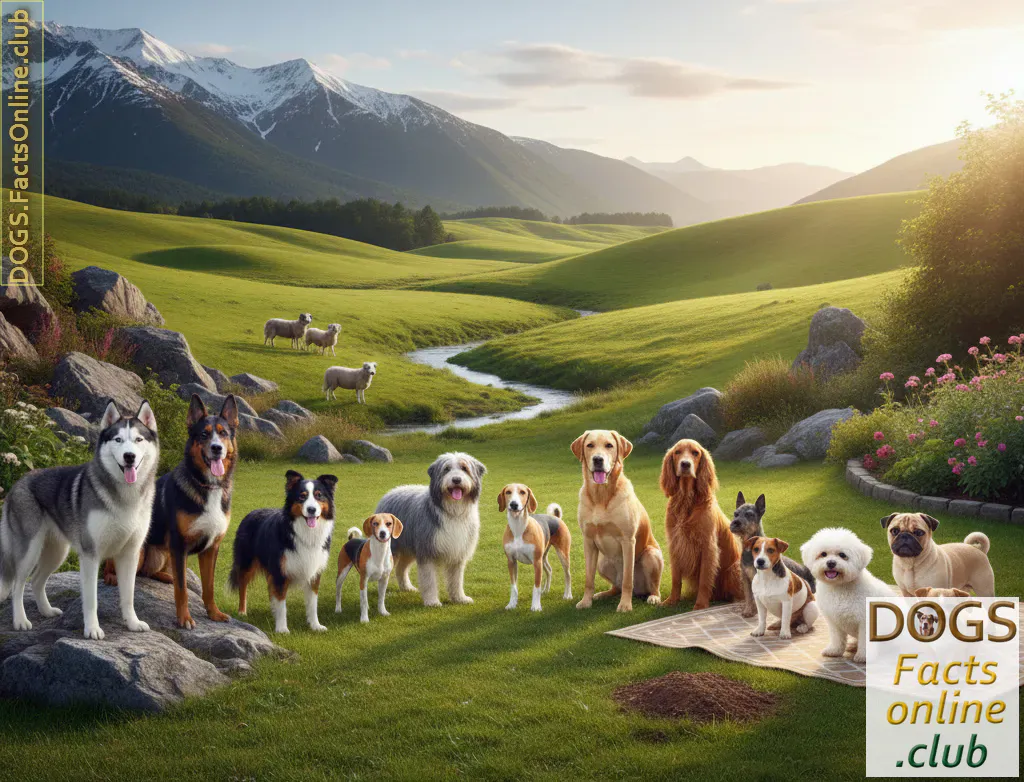






Throughout history, dogs had been bred for function rather than appearance, with interbreeding common, but the Industrial Revolution and rise of the middle class in Europe and North America led to an increased interest in dog breeding as a hobby.
In 1803, Sydenham Edwards published Cynographia Britannica, one of the first works to depict standardised breeds, but it wasn’t until the arrival of organisations like The Kennel Club (UK, 1873) and the American Kennel Club (1884) that breed standards and regulated dog shows were established. The first modern dog show was held in 1874 at Gilmore's Gardens (now Madison Square Garden) in New York, and the first printed breed standards were published by the UK Kennel Club in 1878.
Breeders now began focusing on developing ‘pure’ dog breeds with specific traits for aesthetics, companionship and work. The British Victorians in particular wanted to establish new ‘perfect’ forms, but France and Germany were not far behind.
As we’ve seen, though, dog breeds were never pure or perfect in any sense, so as we look at the different groups and breeds that have arisen since then, bear in mind, firstly, that all dogs are a mix of just about everything that’s gone before, and secondly, that while recognisable dog types and breeds have been known for thousands of years, almost all of the breeds we know today are from the 19th or 20th centuries, and only look like those ancient dogs.
The UK Kennel Club initially categorised dogs into just three groups, in 1873 – Sporting Dogs, Non-Sporting Dogs and Toy Dogs – but now recognises Gun Dogs, Hounds, Pastoral, Terriers, Toy, Working, and Utility.
The American Kennel Club in 1924 established the main groups they still use today – Sporting (same as UK Gun Dogs), Hound, Working, Terrier, Toy, and Non-Sporting (same as UK Utility group) – but the Herding (same as UK Pastoral) group was split off from the Working group in 1983.
Inclusion in these groups can be pretty arbitrary, though, because early breeds fulfilled many roles from hunting to companionship, so their inclusion in a group is based on whichever trait has been considered most important by one of the kennel clubs. It also doesn’t help that the utility (non-sporting) group is for any breed that doesn’t fit neatly into any of the others.
I think the most useful aspect of the breed groups for most people is that they can give a very general guide to certain breed traits, which can be helpful when considering which type of dog would be suitable for you and your circumstances. For example, gun dogs will want to retrieve things, and a pastoral (herding) dog will want to round things up… including people! However, I’d still advise researching specific breeds because even those closely related can exhibit very different behaviours and, of course, pups from the same litter can have very different temperaments.
Frequently Asked Questions
What are the main dog breed groups recognised by the UK Kennel Club?
The UK Kennel Club recognises seven groups: Gundog, Hound, Pastoral, Terrier, Toy, Utility and Working. These categories reflect the historical purpose and traits of the breeds.
What are the main dog breed groups recognised by the American Kennel Club?
The American Kennel Club recognises Sporting, Hound, Working, Terrier, Toy, Non-Sporting and Herding. The Herding group was split from the Working group in 1983.
Why were dog breed groups created?
Breed groups were created by kennel clubs in the 19th century to organise breeds for shows and to standardise traits. They provide a general guide to behaviour and purpose.
Are dog breed groups always accurate?
Not always. Many breeds historically served multiple roles, so their placement can be arbitrary. The Utility or Non-Sporting group often contains breeds that just don't fit neatly elsewhere.
How can breed groups help when choosing a dog?
Breed groups give a broad idea of traits, such as Gundogs enjoying retrieving or Pastoral dogs wanting to herd. They are a starting point, but research into specific breeds is still essential.
When did modern dog shows and breed standards begin?
The first modern dog show was held in 1874 in New York, and the UK Kennel Club published the first printed breed standards in 1878. These events marked the start of regulated shows and standardised breeds.
What are the problems with pedigrees?
Pedigrees can limit genetic diversity because they restrict breeding to a closed pool of dogs. This can increase the risk of inherited health conditions and reduce overall resilience in the breed.
Why are ‘pure-bred’ dogs and 'pedigrees' controversial?
Firstly, many supposedly ancient pure breeds and pedigrees were developed or recreated in the 19th and 20th centuries and are not truly ancient. Secondly, pure-breeding has often prioritised appearance over health and function, and this selective breeding for exaggerated traits has led to health issues in some breeds.
Are crossbreeds healthier than pure-breds?
It depends. Crossbreeds can benefit from greater genetic diversity, which may reduce the risk of inherited disorders. However, health depends on responsible breeding practices, so crossbreeds are not automatically healthier than pure-breds.
Do breed standards contribute to health problems?
In some cases, yes. Breed standards that emphasise extreme physical traits, such as very flat faces or very short legs, have contributed to health issues. Many organisations now encourage revising standards to prioritise welfare.