
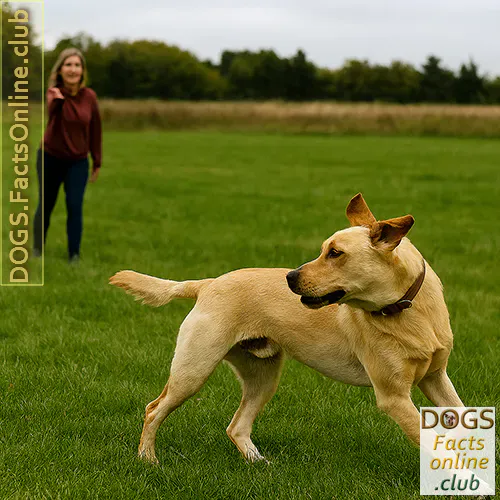






How can you teach a dog to reliably come back when called?
Many owners are surprised to learn that recall is not instinctive, even though dogs are naturally social animals.
A reliable recall must be taught, and without it a dog may ignore its owner in favour of distractions such as other dogs, wildlife or interesting scents. This article explains why recall is so important, how approaches to teaching it have developed, the practical steps to train it effectively, and answers to the most common questions asked by owners.
Jump to Top | How to do it | FAQs
Purpose & function
Recall is the skill of teaching a dog to return to its owner when called. It is one of the most important behaviours because it directly affects safety. A dog that comes back promptly can be allowed more freedom off the lead, which improves quality of life through exercise and exploration. Without recall, owners may feel forced to keep their dogs on the lead at all times, limiting both physical and mental stimulation.
In the past, recall was often taught using punishment or harsh corrections if the dog failed to return. This approach risked making the dog fearful of coming back, as returning could mean scolding. Modern training has shifted towards positive reinforcement, where the dog learns that coming back always leads to something rewarding. This change reflects a better understanding of canine learning and has made recall training more effective and humane. Today, recall is seen not only as a safety measure but also as a way to strengthen the bond between dog and owner, since it relies on trust and consistent communication.
How to teach recall
Teaching recall begins in a controlled environment with minimal distractions. Start indoors or in a secure garden where the dog feels comfortable. Use a short, clear cue such as “come” or “here,” and pair it with a welcoming gesture like open arms. Call the dog when you are confident it will respond, then reward generously with food, praise or play. The aim is to build a strong association between the cue and a positive outcome.Once the dog responds reliably in a quiet setting, gradually increase the challenge. Practise in larger spaces and introduce mild distractions, always rewarding success. A long training line attached to a harness can provide safety while giving the dog freedom to move. If the dog hesitates, crouch down, use an enthusiastic tone and make yourself more appealing than the distraction. Never punish the dog for returning slowly, as this undermines the trust you are building.
Consistency is essential. Use the same cue each time and ensure everyone in the household does the same. Avoid repeating the cue if the dog is unlikely to respond, as this teaches that ignoring it is acceptable. Instead, reduce the difficulty by moving closer or removing distractions, then try again. Over time, vary the rewards so the dog never knows whether it will receive food, a toy or praise, which keeps motivation high.
As the dog improves, practise in different environments such as parks or fields. Each new setting presents fresh challenges, so progress gradually. Always end sessions on a positive note, with the dog returning successfully and being rewarded. With patience and steady practice, recall becomes a reliable behaviour that allows the dog to enjoy freedom safely. For some more ideas on recall, check out the article on recall games here.
Final thoughts
A strong recall gives both dog and owner confidence. It allows the dog to explore the world while remaining safe and reassures the owner that they can call their companion back at any time. Teaching it takes time and consistency, but the result is a skill that enhances daily life and deepens the relationship between them.
Frequently Asked Questions about recall
Why won’t my dog come back when called?
Dogs may ignore recall if the environment is more rewarding than the owner, such as when chasing wildlife or playing with other dogs. Training must make returning more appealing by using high value rewards and practising in gradually more distracting settings.
How long does it take to teach recall?
The time varies depending on the dog’s age, temperament and previous training. Some dogs learn the basics in a few weeks, while others need months of consistent practice. Progress is faster when training is regular and rewards are motivating.
Should I use a whistle for recall?
A whistle can be effective because it carries further than the human voice and sounds the same every time. It is especially useful in open spaces or for households where multiple people handle the dog. The whistle must be used in the same way as a verbal cue, with consistent rewards.
What should I do if my dog ignores me?
If the dog ignores the recall cue, avoid chasing or scolding it. Instead, reduce the level of distraction, use a long line for safety and rebuild the behaviour in easier situations. Make yourself more engaging with movement, toys or treats, and reward generously when the dog does return.
Can older dogs learn recall?
Yes. While puppies may learn quickly, older dogs are capable of learning recall with patience and consistency. They may need more time to break old habits, but positive reinforcement works at any age.
Is it safe to let my dog off the lead before recall is reliable?
It is best to wait until recall is consistent in controlled environments. Until then, use a long training line to allow freedom while maintaining safety. Letting a dog off the lead too soon risks reinforcing running away or ignoring the cue.
Why does my dog come back slowly?
A slow return may mean the reward is not motivating enough or that the dog is uncertain about what will happen when it returns. Ensure the outcome is always positive and occasionally offer a very high value reward to encourage faster responses.
Should I call my dog back only to end play?
No, if recall always signals the end of fun, the dog may become reluctant to return. Mix it up by calling the dog back, rewarding and then releasing it to play again. This teaches the dog that recall does not always mean the fun is over.